
CrowdStrike's $125 million sale: the detail that changes the story
Eight sale rows described one CFO's activity across direct holdings and trusts. A trading-plan footnote changes how the timing should be interpreted.
Anuj Saxena · Founder, TradingEdgeIQ
CrowdStrike's CFO disclosed approximately $125.49 million of stock sales. The amount warrants attention. The ownership columns and trading-plan footnote determine what that attention should lead to.
This article shows how one filing can look like many independent signals when its rows are read without their context. Previously, Nayax's two-founder buying pattern showed activity by two distinct people. Next, Grab's executive purchases separates completed personal purchases from a corporate buyback authorization.
Situation: a large sale appeared in a public filing
CFO Burt W. Podbere's Form 4 reported sales of 480,000 shares on September 24, 2026. Summing eight sale rows at the disclosed weighted-average prices produces approximately $125,491,386 in gross sale value.
The filing acceptance record shows that it became public on September 25 at 9:30:06 p.m. Eastern. The trade date and the time the information became available are different facts.
Complication: eight rows did not mean eight insiders
Four rows describe direct holdings; four describe holdings in four named trusts. They all belong to one reporting person's disclosure. Counting transaction rows as independent people would exaggerate the breadth of selling.
The filing's first footnote adds a separate timing fact: the sales included shares sold under a Rule 10b5-1 trading plan adopted June 24, three months before the reported sale date. The word "included" matters. The cited wording supports the presence of plan-related sales; it does not justify saying that every share necessarily fell under the plan.
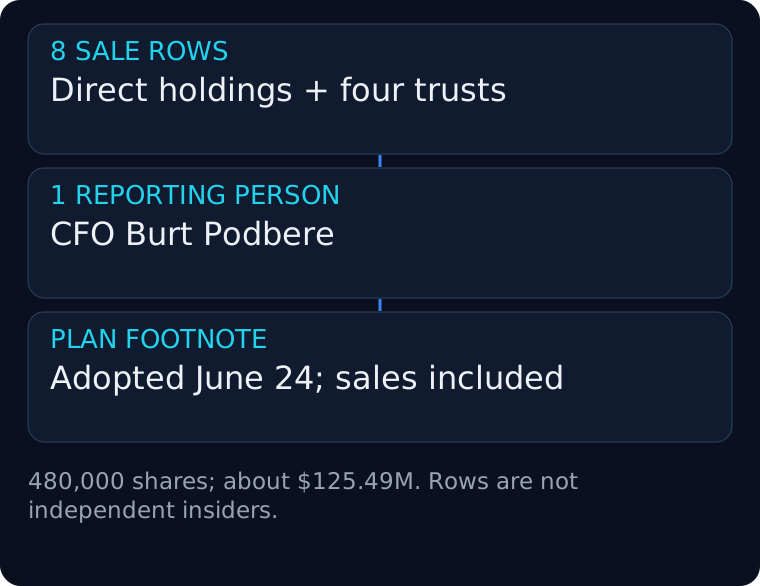
Ownership structure prevents a false count of independent insiders. The plan footnote provides timing context, without establishing why every reported share was sold.
Question: what conclusion does the filing support?
A sale this large merits examination, but the form does not establish a fresh negative view of the business. The earlier plan adoption changes the interpretation of the transaction date. The different ownership accounts change the interpretation of apparent clustering.
Those distinctions lead to a more useful research checklist. Identify the reporting person, group direct and indirect ownership correctly, preserve the plan wording and compare the transaction with other filings before describing company-wide insider sentiment.
This process also clarifies what additional evidence would be needed for a broader conclusion. Separate executives selling would supply a different kind of breadth. A documented change in holdings would supply ownership context. Company results would help frame business questions. None of those observations should be invented to make this one disclosure sound stronger.
Resolution: organize the details that change interpretation
The TradingEdgeIQ filing record brings the transaction values, ownership details, plan indicators, original footnotes and SEC source together. Public Filings Intelligence helps reduce the work of finding and reconciling those details.
That efficiency matters because the most useful information may sit outside the headline amount. Researchers can spend their time assessing the significance of the filing once its facts are organized. The article's interpretation remains source-based editorial analysis, not a price forecast or a claim of automatic motive detection.
What this proved
The filing describes a large sale by one executive across several ownership accounts. It also identifies sales under an earlier trading plan. Preserving those details changes the research question from an apparent wave of independent selling to a specific disclosure that requires careful interpretation.
Return to Nayax's two-founder buying pattern to compare genuine breadth with multiple ownership rows. Continue to Grab's executive purchases for another distinction that changes a headline: authorization versus completed activity.
Image credit
Cover: Ajay Suresh, "Crowdstrike HQ", December 12, 2025, CC BY 4.0. Cropped and resized from the licensed original. Archival company context, not a photograph of the reported transactions. No endorsement implied.
Research and analytics only. No auto-trading. No financial advice. Historical and simulated results do not guarantee future performance.
Related