
How to read SEC Form 4: follow the transaction, then the footnotes
Learn how to read SEC Form 4 transaction codes, dates, ownership and footnotes, with a real Seagate filing showing why context changes the interpretation.
Anuj Saxena · Founder, TradingEdgeIQ
A Form 4 can show shares arriving and shares leaving in the same filing. Reading only the sale row can miss the event that explains it.
This guide shows how to turn an SEC ownership disclosure into a useful research note: identify the person and security, separate the dates, follow the transaction codes and read the footnotes. In this three-part research sequence, evaluating insider buying clusters provides the company-level context. Next, insider buying versus selling compares the questions different transactions raise.
Form 4 makes ownership changes public
Form 4 reports changes in an insider's beneficial ownership. It can contain purchases, sales, award-related transactions and movements involving options or other derivative securities. The SEC's Form 4 instructions explain the form's fields and reporting requirements.
The form is a starting point for research. Its usefulness depends on preserving the details behind the headline.
One label can hide several connected events
Consider Seagate CEO William D. Mosley's September 2026 filing. Table I reports 177,000 shares acquired on September 14 and 97,889.25 shares sold the next day. The acquisition has code M; the sale has code S.
Footnote 1 connects the acquisition to performance-share awards settling. Footnote 2 explains that the sale was required by the issuer to meet tax withholding. Those details give the researcher a specific transaction mechanism rather than an assumed motive.
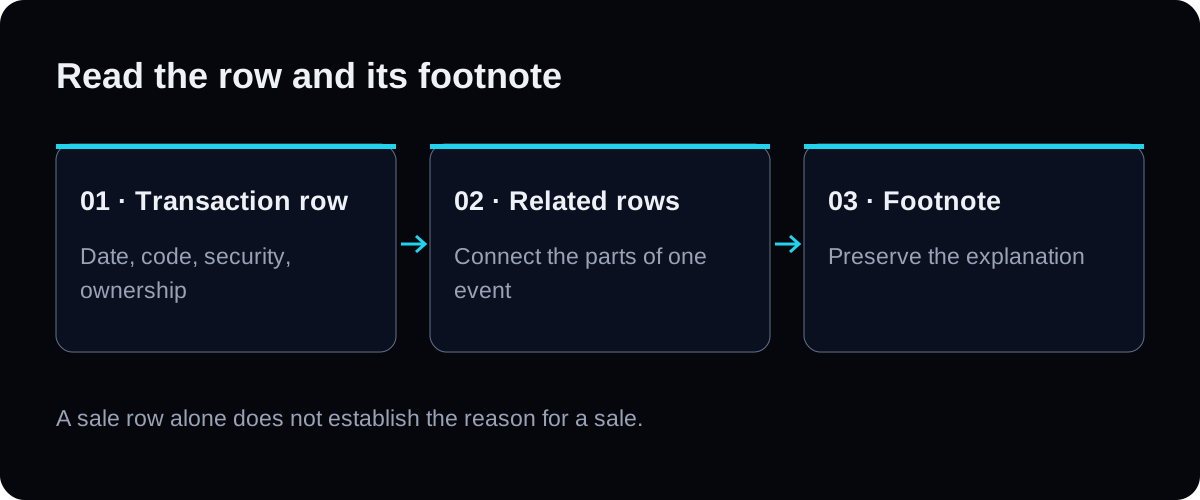
Read the row and its explanation together. In this filing, an award settlement preceded the tax-related sale.
What should you read first?
1. Confirm the person, company and security
Check the reporting person's relationship to the issuer. Read the security title before comparing transactions. An option and an ordinary share represent different instruments.
2. Separate the transaction date from public availability
The transaction date describes when the reported event occurred. The EDGAR filing record shows when the disclosure became available. Keep both in your notes. A research process evaluating what was knowable at a particular time needs the public disclosure date.
3. Use the code to locate the right question
Codes P and S identify purchases and sales that can be open-market or private transactions. Code M concerns certain exercises or conversions; code F concerns securities used to satisfy an exercise price or tax obligation. The code narrows your investigation. The footnotes explain its circumstances. SEC transaction-code instructions
4. Follow the ownership fields
Check whether the holdings are direct or indirect. Preserve any explanation involving a trust, family relationship or entity. Compare resulting holdings within the same security and ownership context.
5. Read the complete filing and any amendment
Related rows can describe different parts of one event. An amended form may correct or add information. Record which version supports your conclusion and retain the source link so another researcher can check it.
Write a note someone else can verify
A useful note records who acted, what security moved, when the event occurred, when it was disclosed, what the code and footnotes establish, and what still needs investigation.
For the Seagate example, the supported conclusion is that an award settlement was followed by an issuer-required tax-withholding sale. The disclosure alone does not determine the company's investment outlook.
TradingEdgeIQ's Public Filings Intelligence brings SEC ownership disclosures into a research workspace. Begin with the public sample report, then use the source filing to check the interpretation.
The takeaway
Reading Form 4 is a sequence: identify the instrument, preserve both dates, connect the rows and follow the footnotes. That sequence turns a transaction label into a researchable explanation.
Return to evaluating insider buying clusters to place the filing in a wider pattern. Continue to insider buying versus selling to compare the questions different ownership changes raise.
Sources
- SEC Form 4 and instructions
- William D. Mosley, Seagate Form 4
- SEC investor bulletin on Forms 3, 4 and 5
Research and analytics only. No auto-trading. No financial advice. Historical and simulated results do not guarantee future performance.
Related