
Duke Energy’s lobbying filing connects AI demand with power policy.
Duke Energy’s $2.28 million quarterly lobbying report included data centers, load growth, and grid reliability, giving investors a concrete policy research trail.
Anuj Saxena · Founder, TradingEdgeIQ
AI demand has a physical requirement: electricity. Understanding the investment story therefore means looking at the policy and infrastructure decisions that affect how power reaches new customers.
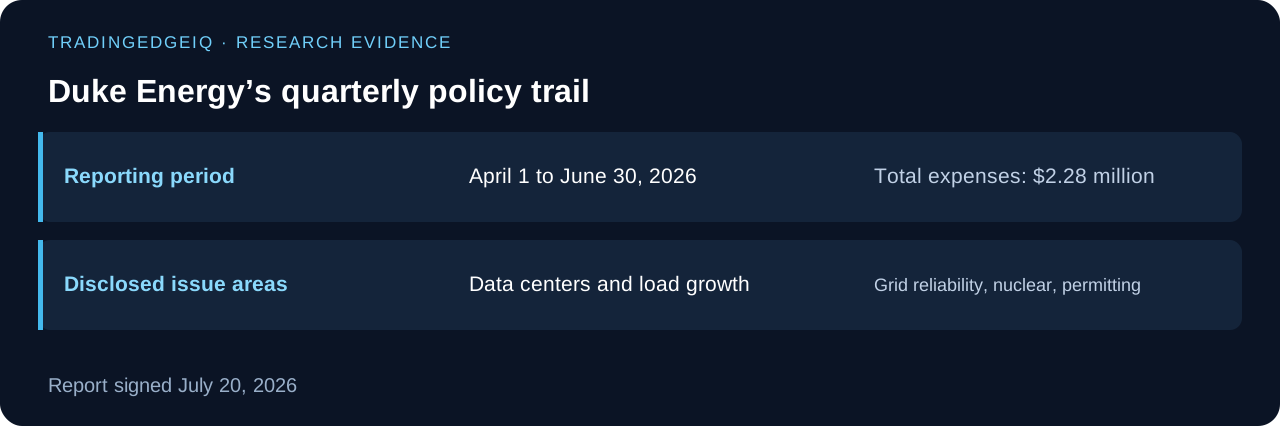
Duke Energy’s second-quarter 2026 lobbying report offers a concrete place to begin. It reported $2.28 million in total lobbying expenses and listed issues involving data centers, electricity load growth, grid reliability, nuclear energy, and permitting.
Those topics help investors connect an industry theme with the policy work a company disclosed.
Previous in this collection: Crypto’s infrastructure story is moving beyond token prices.
Next in this collection: What institutional holdings can tell you, and how to use them.
What the report contains
The filing covers April 1 through June 30 and was signed July 20, 2026. The $2.28 million figure is the quarter’s total across multiple issue categories. It is not a separately disclosed amount spent exclusively on AI or data centers. Read Duke Energy’s official lobbying report.
That makes the issue descriptions especially useful. The amount provides scale; the descriptions show the subjects the company reported addressing.
This is a historical filing used to illustrate the research value of TradingEdgeIQ’s Corporate Lobbying Intelligence solution.
Why the policy trail matters
An electricity-demand thesis depends on more than interest in AI. Investors also need to understand how a utility can serve additional load and what infrastructure is required.
The disclosed topics give that work a focus. Grid reliability points toward the system’s ability to support demand. Permitting raises questions about the steps required to develop infrastructure. Nuclear energy introduces another part of the power-supply discussion.
A lobbying filing identifies policy activity. To evaluate the business implications, an investor can follow that trail into company plans, regulatory proceedings, and financial disclosures.
How TradingEdgeIQ helps organize the research
Corporate Lobbying Intelligence brings the company, reporting period, amount, issue descriptions, and source record into a more accessible research view.
That helps users find relevant disclosures and understand what the reported amount represents before drawing conclusions. Preserving the original issue descriptions also makes it easier to distinguish a broad lobbying total from a specific policy topic.
For an investor comparing utilities, those details provide a consistent starting point. The user can investigate which companies are addressing similar issues and then compare their operating plans and investment requirements.
A more informed way to evaluate the theme
The practical benefit is a shorter path from a broad idea, such as AI power demand, to concrete company research.
Duke Energy’s filing gives users specific subjects to investigate. TradingEdgeIQ’s Corporate Lobbying Intelligence solution helps make this type of evidence easier to find and assess, so users can build an investment view with greater confidence.
Explore TradingEdgeIQ’s Corporate Lobbying Intelligence solution.
Previous in this collection: Crypto’s infrastructure story is moving beyond token prices.
Next in this collection: What institutional holdings can tell you, and how to use them.
Research and analytics only. No auto-trading. No financial advice. Historical and simulated results do not guarantee future performance.
Related