
What institutional holdings can tell you, and how to use them.
Learn how quarter-end 13F disclosures help identify institutional research themes and how TradingEdgeIQ makes reported holdings easier to evaluate.
Anuj Saxena · Founder, TradingEdgeIQ
Institutional holdings can help investors discover companies and themes worth researching. The most useful reading begins with a simple question: what position did the manager report, and for which quarter?
Form 13F provides a dated view of certain holdings reported by qualifying institutional investment managers. Reading it with the period in mind makes the information much more useful.
TradingEdgeIQ’s Institutional Activity Intelligence (13F) solution helps users organize reported holdings and follow the underlying disclosures, making institutional research easier to begin.
Previous in this collection: Duke Energy’s lobbying filing connects AI demand with power policy.
Next in this collection: An Oracle director committed $3.48 million. Here are the details.
Start with the date
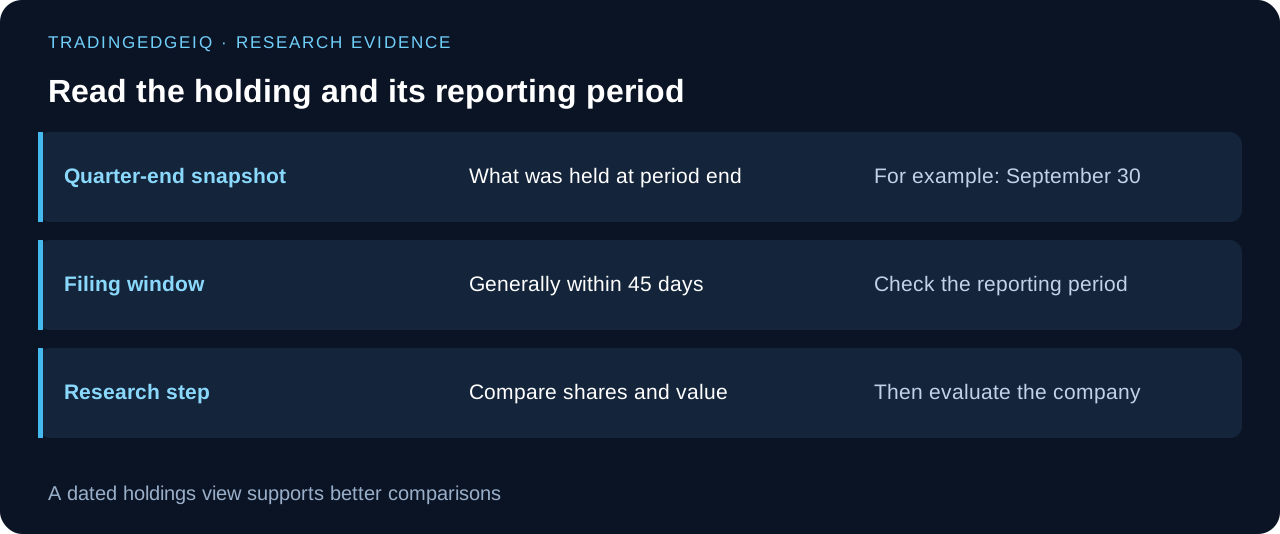
A 13F reports quarter-end holdings, with filings generally due within 45 days after the quarter ends. The filing date and the date of the reported positions therefore describe different things. See the SEC’s Form 13F guidance.
For the quarter ending September 30, 2026, investors should expect the reporting window to extend into the following weeks. A filing encountered in early October should be checked for its reporting period before being treated as a new third-quarter position.
That date check helps users compare the right periods and avoids building a research thesis around the wrong snapshot.
Look at how positions change
Useful comparisons include newly reported positions, positions that disappear, and changes in reported share counts. Similar holdings across managers can also suggest a company or theme worth investigating.
A higher reported market value can reflect a higher stock price even when the share count is unchanged. Looking at shares alongside value helps clarify what actually changed in the reported position.
These filings provide holdings snapshots. They do not give a complete trade-by-trade account or establish that a manager still holds the same position today. Read Investor.gov’s introduction to Form 13F.
Turning institutional activity into a research idea
An investor who notices a newly reported holding has a focused starting point: examine the company, the position’s scale, and how it fits the manager’s other reported holdings.
The next step is to evaluate the business using current financial disclosures and market information. Institutional interest can help prioritize that work; the user’s own analysis determines whether the opportunity fits their goals.
This article is a guide to using the data, rather than a claim about a newly disclosed manager trade.
How TradingEdgeIQ supports the decision
Institutional Activity Intelligence helps users move from a filing search to an organized view of the reported holdings and their sources.
That saves time at the discovery stage and makes comparisons easier to investigate. With dates and position details together, users can explain why a company entered their research list and what they still need to evaluate.
The benefit is a more disciplined use of institutional evidence: discover relevant activity, understand the snapshot, and bring that knowledge into a decision with greater confidence.
Explore TradingEdgeIQ’s institutional research solutions.
Previous in this collection: Duke Energy’s lobbying filing connects AI demand with power policy.
Next in this collection: An Oracle director committed $3.48 million. Here are the details.
Research and analytics only. No auto-trading. No financial advice. Historical and simulated results do not guarantee future performance.
Related