
An Oracle director committed $3.48 million. Here are the details.
Stephen H. Rusckowski bought 25,000 Oracle shares on September 29. See how TEIQ helps turn a substantial director purchase into focused investment research.
Anuj Saxena · Founder, TradingEdgeIQ
An Oracle director committed approximately $3.48 million to company shares on September 29, 2026.
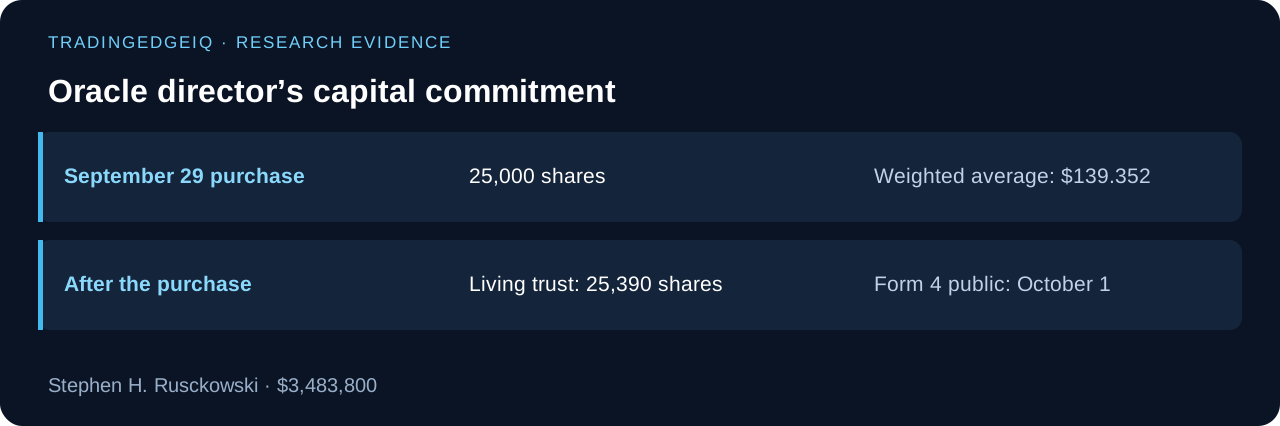
Stephen H. Rusckowski purchased 25,000 shares at a weighted average price of $139.352. The shares were held through his living trust, whose reported position increased to 25,390 shares after the purchase.
That is a substantial capital commitment and a concrete starting point for researching Oracle.
Previous in this collection: What institutional holdings can tell you, and how to use them.
Next in this collection: The first $4.6 million was only the beginning. Nayax’s CEO kept buying.
What the filing establishes
The transaction value calculated from the reported average price was $3,483,800. This was a cash purchase of shares, giving investors a direct view of a director committing capital to the company.
The purchase took place on September 29. The SEC Form 4 became public on October 1, so the investment date and the date readers could see the filing should be kept separate. Read Rusckowski’s Form 4.
Those details explain what makes the disclosure worth attention: an identified director, a sizeable purchase, and a source record that investors can inspect.
Why the details improve the research
A headline about insider activity can leave important questions unanswered. Who bought? Was the reported change a purchase? How much capital was committed? When did it happen?
Here, the filing provides clear answers. Investors can take those facts into a review of Oracle’s business outlook and valuation.
The holding through a living trust also explains how the shares were owned. It helps readers understand the reported position without confusing the trust’s share count with every security the director may hold.
What TradingEdgeIQ contributes
TradingEdgeIQ’s Public Filings Intelligence solution organizes disclosures around the person, company, transaction, and original filing. That makes meaningful activity like this easier to discover and investigate.
Users can spend their research time examining the company rather than first having to assemble the basic transaction details. Someone already following Oracle gets a specific piece of evidence to revisit. Someone new to the company gets a defined reason to start looking.
For this story, the valuable evidence is the purchase itself and its documented size. An investor can then assess how that commitment fits with the company’s financial performance, investment plans, and the price available in the market.
Making the next decision clearer
A useful next step is to write down what would strengthen an Oracle investment thesis and what would change it. The director’s purchase can be considered alongside that checklist.
Public Filings Intelligence helps users arrive at that evaluation with the source evidence already organized. The result is less time searching and a clearer basis for deciding whether the opportunity deserves further attention.
Previous in this collection: What institutional holdings can tell you, and how to use them.
Next in this collection: The first $4.6 million was only the beginning. Nayax’s CEO kept buying.
Research and analytics only. No auto-trading. No financial advice. Historical and simulated results do not guarantee future performance.
Related