
Crypto’s infrastructure story is moving beyond token prices.
Central bank settlement for tokenized assets and real-world-asset derivatives reveal two distinct crypto infrastructure trends worth researching.
Anuj Saxena · Founder, TradingEdgeIQ
A crypto price chart shows what traders paid. It can miss changes in the infrastructure through which financial activity takes place.
Two developments in September 2026 illustrate why investors should look beyond token prices: central bank settlement for tokenized assets, and substantial trading activity in derivatives linked to real-world assets.
They describe different markets, but both offer useful starting points for understanding where digital financial infrastructure is developing.
Previous in this collection: Crypto demand surged. The next question was market confirmation.
Next in this collection: Duke Energy’s lobbying filing connects AI demand with power policy.
A central bank settlement milestone
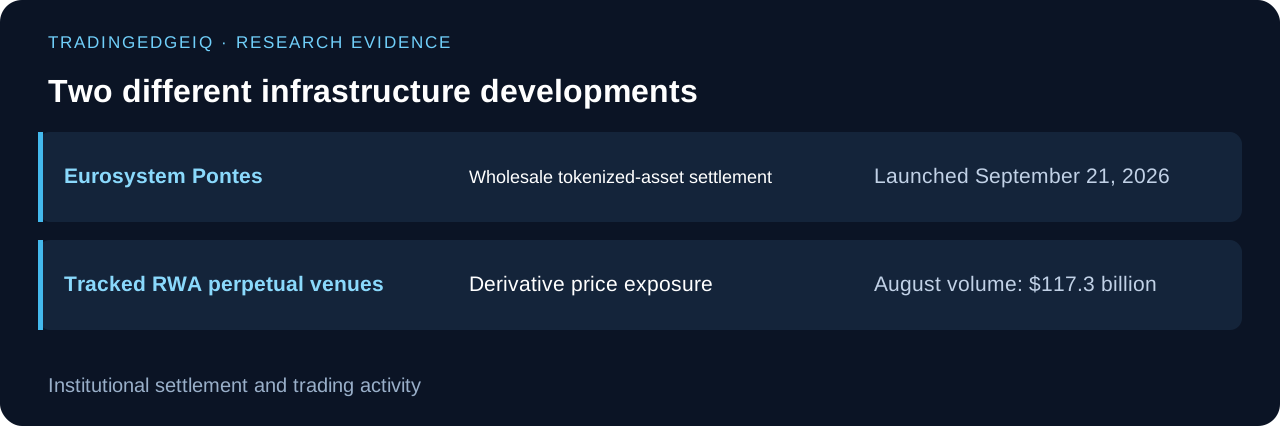
On September 21, the Eurosystem launched Pontes, enabling wholesale transactions involving tokenized assets to settle in central bank money. The service is designed to expand gradually. Read the ECB announcement.
For researchers, the significance is practical. Tokenized assets need ways to complete transactions, and settlement in central bank money is a concrete institutional development to follow.
The relevant questions concern adoption, participating institutions, and the kinds of transactions that use the service. Those questions help turn a broad tokenization theme into an investigation of actual financial activity.
A different market: real-world-asset perpetuals
A September 23 research report from a16z crypto put August trading volume in its tracked real-world-asset perpetual markets at $117.3 billion, with 86% occurring onchain. July’s total was higher, at $145.1 billion. Read the research and charts.
Perpetual derivatives provide exposure to an underlying price without an expiry date. Trading a contract linked to an asset is different from owning the asset itself.
That distinction helps investors interpret the volume correctly. The figures describe derivatives activity across the tracked venues, rather than the value of assets transferred into tokenized ownership.
Turning a trend into useful research
Together, these developments suggest two separate lines of inquiry. One concerns institutional settlement infrastructure. The other concerns demand for market access and price exposure through trading venues.
An investor can ask who provides the service, how it is used, and where the business economics sit. A trading-volume headline becomes more useful when it leads to questions about customers, fees, competition, and sustained activity.
This report draws on external industry sources. It does not imply that TradingEdgeIQ’s scanner measures Pontes usage or covers every real-world-asset derivatives market.
Where TradingEdgeIQ helps
TradingEdgeIQ’s Crypto Intelligence solution adds a structured screening process when research turns toward tradable crypto assets. Momentum, liquidity, and confirmation help users evaluate market conditions around the assets they follow.
The combination is useful: industry research helps explain which themes deserve attention, and a market-screening view helps users assess what is happening in their tradable universe.
Users can spend less time collecting scattered market signals and more time deciding how a theme fits their own criteria. That makes crypto research more focused, from the first interesting development through the decision to keep watching or investigate a trade.
Explore TradingEdgeIQ’s Crypto Intelligence solution.
Previous in this collection: Crypto demand surged. The next question was market confirmation.
Next in this collection: Duke Energy’s lobbying filing connects AI demand with power policy.
Research and analytics only. No auto-trading. No financial advice. Historical and simulated results do not guarantee future performance.
Related