
GameStop’s $48.5 million buying pattern went beyond Ryan Cohen.
Six purchases by four GameStop insiders created a broader story than one large trade. TradingEdgeIQ connected the filings to make the pattern easier to evaluate.
Anuj Saxena · Founder, TradingEdgeIQ
Ryan Cohen’s purchases attracted attention. The full GameStop story included three other insiders and six purchases across two weeks.
Between September 8 and September 21, 2026, four GameStop insiders purchased a combined 2,238,435 shares for approximately $48.5 million. TradingEdgeIQ’s Public Filings Intelligence solution connected that activity, giving users a broader picture of the buying than a single headline could provide.
The historical September 22 snapshot carried an Activity Relevance score of 85 out of 100.
Previous in this collection: Xenon’s CEO and CFO bought $1.68 million on the same day.
Next in this collection: Crypto demand surged. The next question was market confirmation.
How the pattern developed
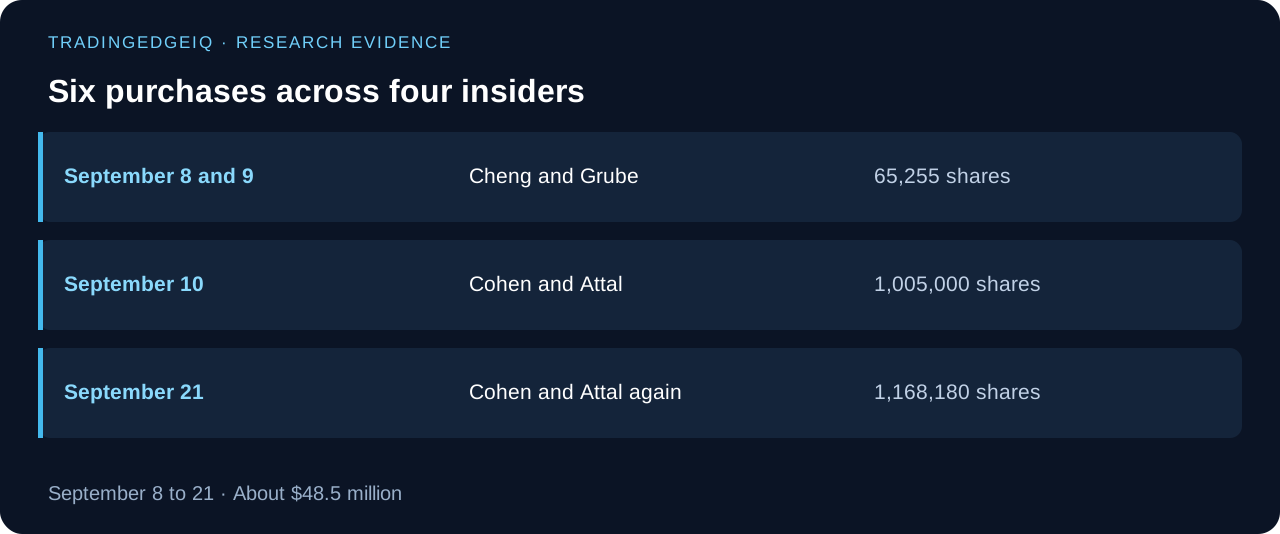
Director Lawrence Cheng purchased 55,000 shares on September 8. Director James Grube bought 10,255 shares the next day.
On September 10, Cohen purchased one million shares for approximately $20.38 million, and director Alain Attal purchased 5,000 shares for $100,000.
Both returned on September 21. Cohen purchased another 1,150,680 shares for approximately $26.39 million. Attal added 17,500 shares for approximately $402,000.
Those six purchases totaled $48,501,611.60, based on the reported transaction prices. Cohen accounted for most of the value, while the other directors added breadth to the pattern.
Source filings: Cheng, Grube, Cohen on September 10, Attal on September 10, Cohen on September 21, and Attal on September 21.
What a connected view adds
The useful insight is the sequence. Users can see who participated, how the amounts differed, and which buyers made additional commitments.
That helps an investor distinguish a company-wide pattern of reported activity from the impact of one unusually large purchase. It also gives someone following GameStop a clear reason to revisit their research: the commitment continued, and more than one board member participated.
TradingEdgeIQ’s historical record carried Medium Evidence Confidence because part of the ownership comparison was missing. The disclosed transaction details remain available for inspection, and the confidence label identifies the portion of the broader record that needs follow-up.
Putting the signal to work
An investor can use this pattern to focus on GameStop’s operating performance, capital allocation, and valuation. The filings establish the purchases; the investor’s analysis determines how that commitment fits an investment thesis.
Public Filings Intelligence makes the discovery and assembly work easier, leaving more time to evaluate the business and decide whether the opportunity fits a trading plan.
For GameStop, the benefit was a clearer view of repeated buying across four insiders. That is a more useful research starting point than knowing only that Ryan Cohen bought again.
Previous in this collection: Xenon’s CEO and CFO bought $1.68 million on the same day.
Next in this collection: Crypto demand surged. The next question was market confirmation.
Image credit: Ryan Cohen photo: Bill Jerome, CC BY-SA 4.0. Preserve the source asset attribution and license when publishing.
Research and analytics only. No auto-trading. No financial advice. Historical and simulated results do not guarantee future performance.
Related